Is AI Taking Jobs or Changing the Way We Work?
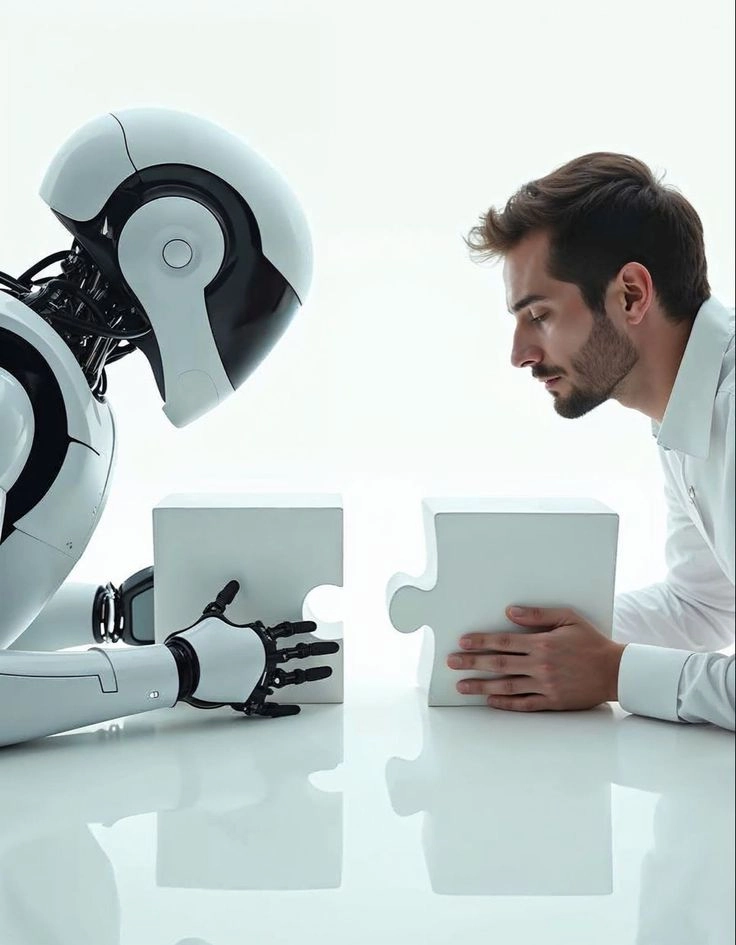
“Is AI going to take my job?” It’s a question I hear more often now, and not just from people worried about factory work or data entry. Marketers, writers, designers, and even people in fairly technical roles are asking it. The honest answer isn’t a simple yes or no — it’s more useful to ask a slightly different question first.
The conversation around AI taking jobs tends to jump straight to fear or straight to dismissal, without stopping to look at what’s actually changing. Some tasks genuinely are being automated. Some jobs are shrinking. But a lot of what’s happening is less about jobs disappearing entirely and more about the shape of those jobs changing — sometimes quite a lot.
This article looks at what’s really going on: which parts of work are most affected, what AI can and can’t do well, and what it actually takes to adapt, especially if you work in a field like digital marketing where AI tools are already part of daily work.
The Real Question: Is AI Replacing Jobs or Tasks?
Most jobs aren’t a single task repeated all day — they’re a bundle of different tasks, some routine, some judgement-heavy, and some relationship-based. AI tends to be good at specific tasks within a job, not at doing the entire job end to end.
A customer support role, for example, might involve answering repetitive questions, handling complex complaints, and building rapport with frustrated customers. AI can now handle a good chunk of the repetitive questions. It’s far less reliable at the complex, emotionally sensitive parts. So the honest way to describe what’s happening isn’t “AI is replacing customer support roles” — it’s “AI is replacing a portion of the tasks inside that role.”
This distinction matters because it changes the practical question. Instead of “Will AI take my job?” a more useful question is “Which parts of my job are repeatable and predictable, and which parts require judgement, context, or human connection?” The first category is where AI automation tends to move in fastest.
How AI Is Already Changing the Workplace
AI’s impact on jobs isn’t a future event — it’s already visible in a lot of workplaces, even if it doesn’t always look dramatic.
Some of the ways this shows up:
- Faster first drafts — writing, code, designs, and reports that used to take hours now start from an AI-generated draft
- Automated repetitive processes — data entry, basic reporting, simple customer queries, and scheduling
- Research and summarisation — pulling together information that used to take a person much longer to gather manually
- Decision support — AI tools flagging patterns or anomalies for a human to review, rather than deciding outright
What’s notable is that in most of these examples, a person is still involved — reviewing, editing, deciding, or handling exceptions. The workplace is changing in the sense that fewer hours are spent on the mechanical parts of a task, and more attention shifts to reviewing and judgement. That’s a real shift in how work gets done, even where the job title itself hasn’t disappeared.
Which Jobs Are Most Affected by AI?
Jobs affected by AI tend to share a few traits, rather than falling neatly into “AI can do this whole job” categories.
Roles are more exposed to disruption when they involve:
- Highly repetitive, rules-based tasks
- Large amounts of data processing or pattern recognition
- Content that follows a predictable structure or format
- Limited need for in-person interaction, negotiation, or physical presence
Roles tend to be more resistant to disruption when they involve:
- Complex judgement calls with incomplete information
- Building trust or relationships over time
- Physical, hands-on work in unpredictable environments
- Navigating ambiguity, ethics, or context that changes case by case
This doesn’t mean “safe” jobs are unaffected — most jobs will see some of their tasks automated to a degree. It means the core of certain roles is much harder to automate than others, which is a more useful way to think about risk than trying to label entire professions as “safe” or “at risk”.
What AI Can Do—and What It Still Can’t Do
It’s worth being specific here, because vague statements about AI’s capabilities tend to fuel more anxiety than clarity.
AI is generally strong at:
- Processing and summarising large amounts of information quickly
- Generating drafts, variations, and options based on patterns it has learned
- Recognising patterns in structured data
- Handling repetitive, well-defined tasks consistently
AI still struggles with:
- Genuine judgement in ambiguous or novel situations
- Understanding context it hasn’t been explicitly given
- Long-term relationship building and trust
- Ethical or nuanced decisions where the “right” answer depends heavily on circumstances
- Physical dexterity in unpredictable real-world environments
None of this is a permanent line — these tools keep improving. But as things stand, the gap between “producing an output” and “making a genuinely good judgement call in context” is still a meaningful one, and it’s where a lot of human work still concentrates.
The Human Skills AI Can’t Easily Replace
If AI is handling more of the repetitive and mechanical work, the skills that matter more are the ones that sit on the other side of that line.
Some human skills in the AI era that tend to hold their value:
- Judgement under uncertainty — deciding well when information is incomplete or conflicting
- Communication and relationship-building — the kind of trust that’s built over repeated, real interactions
- Critical thinking — knowing when an AI-generated answer is actually right for the situation, not just plausible-sounding
- Adaptability — being comfortable learning new tools and adjusting how you work
- Domain expertise — deep, specific knowledge that lets you spot when something doesn’t add up
- Creativity with intent — not just generating ideas, but knowing which idea actually fits the goal
These aren’t new skills invented because of AI — they’ve always mattered. What’s changed is that they’re becoming a larger share of what makes someone valuable at work, as the more routine share of tasks gets automated.
How Businesses Should Adapt to AI
For business owners, the question isn’t only “will AI replace my staff?” — it’s also “how do we use AI well without losing what makes our business trustworthy and effective?”
A few practical starting points:
- Identify which tasks in your business are repetitive and well-defined — these are good candidates for AI-assisted tools
- Keep the human review in place for anything involving judgement, client relationships, or reputation
- Train staff to use AI tools rather than treating AI adoption as purely a cost-cutting move
- Reassess roles based on tasks, not job titles — a role can shrink in hours needed for routine work while growing in importance for judgement-based work
- Avoid assuming AI removes the need for oversight — errors and context gaps still need human checking
Businesses that adapt well tend to treat AI as a way to change how work gets done, not simply as a way to reduce headcount. The ones that get the most value tend to combine AI’s speed with human judgement, rather than choosing one over the other.
AI Isn’t the End of Work — It’s a Shift in How We Work
Looking at all of this together, “AI taking jobs” is a real concern, but it’s a bit too broad on its own to be useful. A more accurate picture is that AI is taking over specific tasks — mostly repetitive, well-defined ones — while shifting what’s expected of people in almost every role: more judgement, more strategic thinking, and more comfort working alongside these tools rather than without them.
This shift won’t be even. Some roles will shrink meaningfully. Some will change shape without shrinking much at all. Some will grow, particularly roles focused on overseeing, directing, or improving how AI tools are used within a business. There’s no way to predict this with certainty for every industry, and it would be misleading to claim otherwise.
Conclusion
AI is changing the workplace, and pretending otherwise doesn’t help anyone prepare for it. But framing it purely as “AI vs. jobs” misses the more useful conversation, which is about tasks, skills, and how work is organised. For most people, the practical response isn’t panic or denial — it’s understanding which parts of your work are most automatable and deliberately building the judgement, communication, and strategic skills that remain hard to replace.
Businesses and individuals who engage with that shift early — learning the tools, adjusting how work is structured, and focusing on the human skills that still matter most — tend to be in a stronger position than those who wait to see how things play out.
Author Info: Shahana Febin – best digital marketing analyst in sharjah